
Don't judge a foil wing by area alone
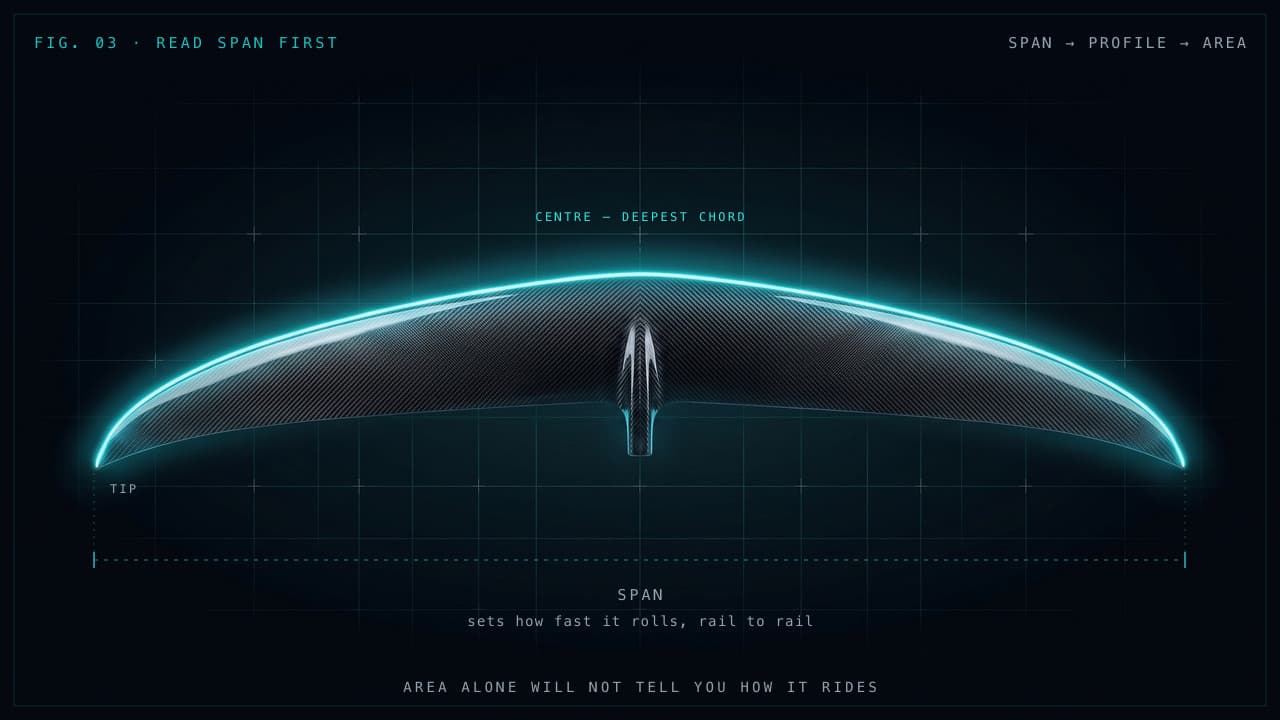
- Span
- How will it roll and turn? Shorter span rolls easier and turns quicker; longer span sits locked-in.
- Profile
- Where will it make lift, and how fast will it go? Section shape drives low-speed lift, drag and top end.
- Area & planform
- How is that lift distributed across the span? Read this third, not first.
When comparing hydrofoil frontwings, span is one of the first numbers to look at.
Span gives you a strong indication of how the wing will roll, turn, and transition from rail to rail. In general, a shorter-span wing will roll more easily and feel quicker through turns, while a longer-span wing tends to feel more locked-in and requires more input to roll.
But area alone tells you very little about the speed range of a wing.
Profile is doing more than you think
If you take several wings with similar planforms and change the foil profile, you can dramatically change how they perform — even when their projected areas are similar.
The profile determines how the wing develops lift. It has a major influence on low-speed lift, acceleration, drag, and top-end speed. Two wings can agree on every number a spec sheet prints and still disagree about what they do underfoot, because the section shape is where most of the behaviour lives.
Why "I like a 750, so I need another 750" fails
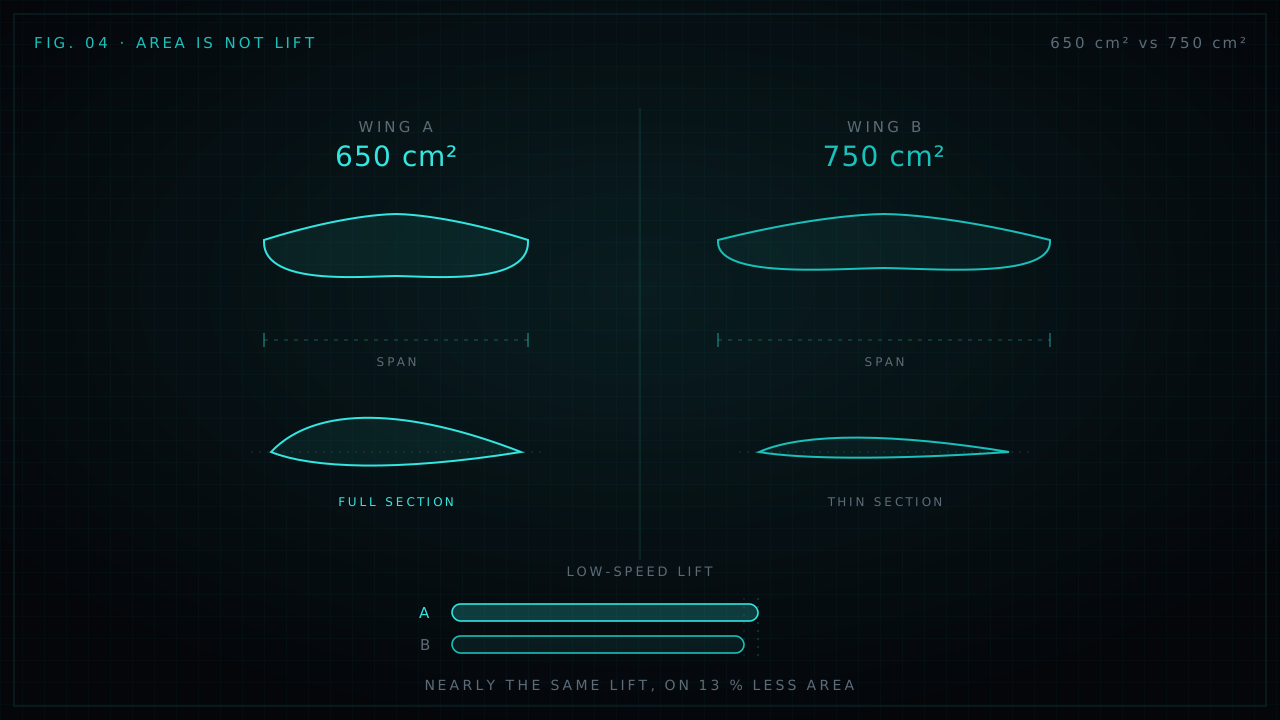
You can't simply say "I like a 750 cm² wing, so I need another 750."
A 600–650 cm² wing with a higher-lift, higher-camber profile — the A 730-650c sits right there, 650 cm² on a 730 mm span — can potentially produce as much or even more low-speed lift than a 750 cm² wing using a thinner, lower-drag profile.
At the same time, the smaller wing has less surface area — and if it also has a shorter span, it can have a faster roll rate and more responsive turning. Depending on the profiles used, the two wings could even have surprisingly similar usable speed ranges while feeling completely different under your feet.
So the honest version of "I like a 750" is usually "I like the lift and the speed range I get from that 750." Those are properties of the whole wing, not of the number.
The three numbers, in order
| Read | Question it answers | What it predicts |
|---|---|---|
| Span | How will it roll and turn? | Roll rate, rail-to-rail feel, how locked-in it sits |
| Profile | Where will it make lift? | Low-speed lift, acceleration, drag, top end |
| Area & planform | How is that lift distributed? | Where the wing carries load across the span |
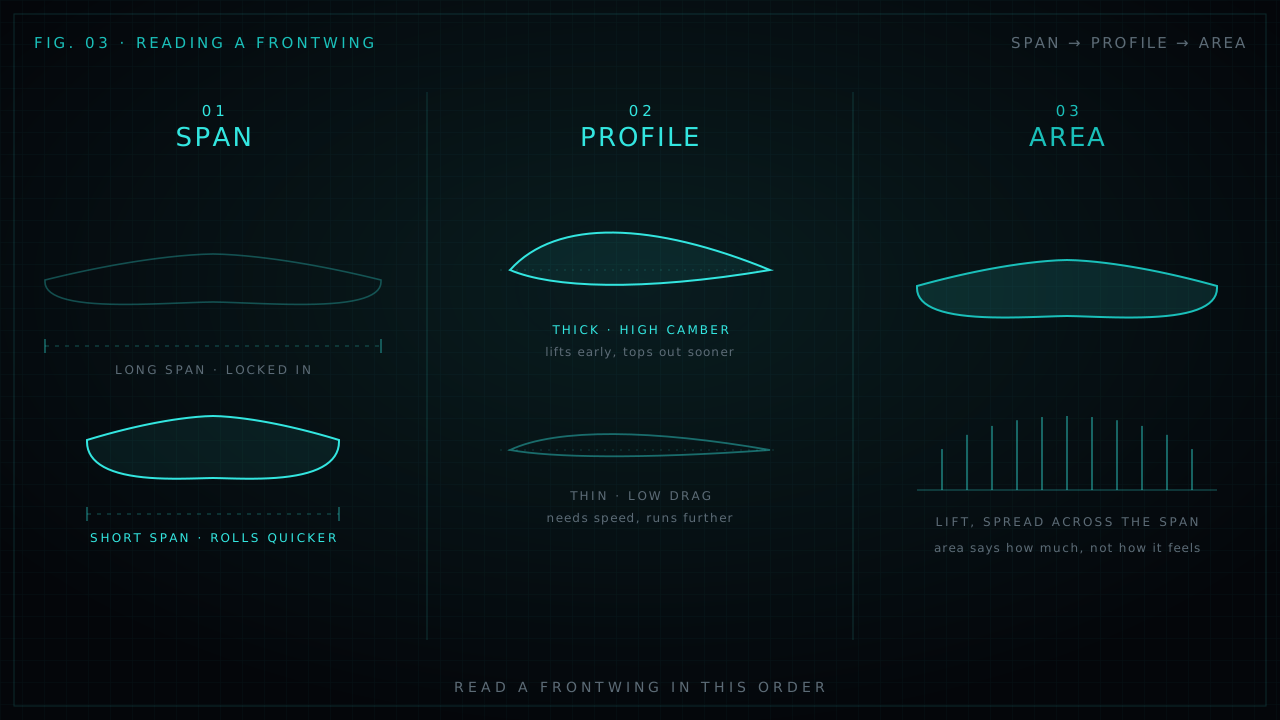
Area still matters. It just belongs third, describing how the lift the profile generates gets spread across the span you chose — not standing in for either.
What this changes when you shop
Two wings with the same area can behave completely differently, and a smaller wing can have more low-end lift than a larger one. That means area alone can't carry a recommendation, and a spec table that leads with it is answering a question you didn't ask.
It's also the reason OXZA names wings by span rather than area. Area is measured inconsistently across brands — projected, flat, outline — so the same wing can wear three different numbers depending on who is printing them. Span is span. Two riders comparing an 800 from different brands are at least comparing the same measurement — and on the wings page every OXZA frontwing is filed under the span you would measure yourself.
Start with span, ask what the profile is built to do, then let area tell you how it's distributed.
See the full range on the wings page, and the compatibility chart for what pairs with what. The rear wing changes the same behaviour from the other end — see the stabilizer pairing guide. And for the vertical version of this argument, where the number on the sticker also isn't the number you ride, see foil mast height: what are you really riding?
Questions
Is foil wing area the best way to compare frontwings?
No. Area only describes how much surface there is, not how the wing makes lift or how it turns. Span is the better first number for roll and turn behaviour, and the foil profile decides low-speed lift, drag and top-end speed. Two wings of the same area can ride completely differently.
Can a smaller foil wing have more low-end lift than a bigger one?
Yes. A 600–650 cm² wing with a higher-lift, higher-camber profile can produce as much low-speed lift as a 750 cm² wing built on a thinner, lower-drag profile — while still turning faster, because it has less area and often less span.
What does span tell you about a hydrofoil frontwing?
How it rolls. A shorter-span wing rolls more easily and feels quicker from rail to rail; a longer-span wing feels more locked-in and takes more input to roll. It is the single most useful number for predicting turn feel, which is why OXZA names its wings by span rather than area.
#frontwing #span #profile #area #foiltheory #buyingguide
Keep reading
Custom fuselage geometry: putting the mast where you ride
Two fuselages of the same length can ride completely differently. How OXZA specifies a custom fuselage by three measurements, how the builder works, and how to order one.
Will it run? Wind, time and fetch for downwind foiling
Bump size comes from three inputs: wind speed, how long it has blown, and how much open water it crossed. Read all three and you know the size and the foil.
OX Loop: a knotless leash loop for every foil board
The OX Loop is a continuous Spectra leash loop rated to 15,000 lb. No knots to tie, on and off in seconds, tight and clean at the plug. Coming soon, $9.99.